
Your students are finally writing (yay!). But the writing they turn in is weak and bland. How do you help? Writing strong verbs is one way students can add more oomph to their words and make their writing more engaging.
It can be difficult to nail down exactly why students’ writing isn’t working. Sometimes the problem isn’t the student’s ideas. It isn’t the organization, the evidence, or even the grammar.
Sometimes, the problem is the verbs.
Teaching students about writing strong verbs is a simple way to help them make a huge difference in their writing without adding more sentences, more paragraphs, or more words to their word count.
In fact, students can often make their writing more descriptive simply by replacing a few weak verbs with stronger verbs.
And once they start noticing the difference, they can apply this strategy to almost anything they write.
So, how do you teach them to choose stronger verbs (and ditch the weak ones?). This blog post will share some strategies and tips for teaching students to use powerful verbs.
(Need a done-for-you lesson, fast? Grab my Using Strong Verbs Lesson here!)

What Are Strong Verbs?
Strong verbs are specific, descriptive verbs that communicate an action, feeling, or state more precisely than a weaker, more general verb.
Consider these two sentences:
The dog went across the yard.
There’s nothing grammatically wrong with this sentence. But “went” doesn’t tell us very much.
Now look at this:
The dog bolted across the yard.
Suddenly, we have a much clearer picture.
The verb “bolted” gives us information about how the dog moved. We can picture the action in our reader’s mind.
That’s the power of choosing the right verbs.
Students don’t necessarily need more words to make their writing interesting. They need better word choice.
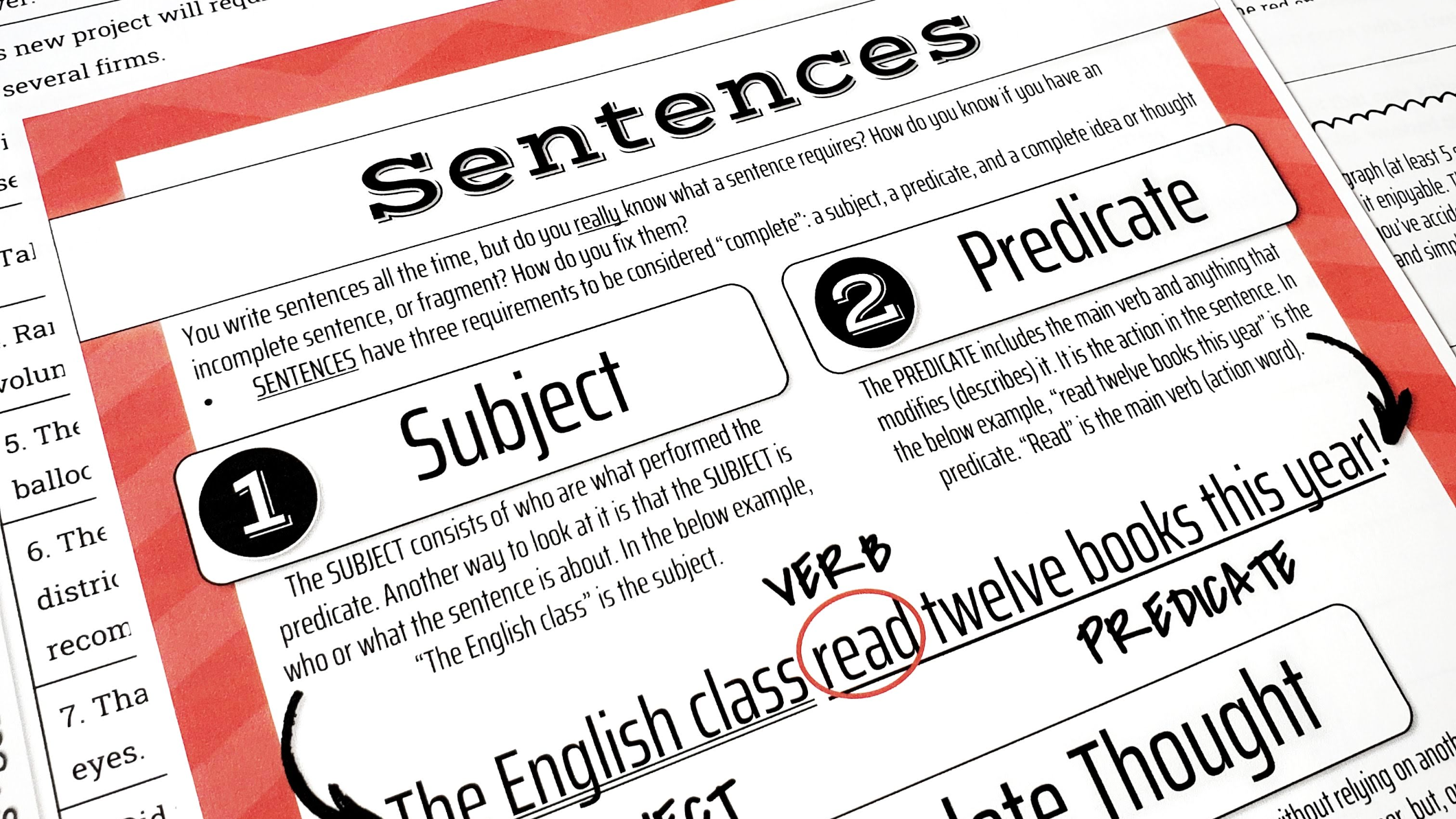
Weak Verbs vs. Stronger Verbs
One of the easiest ways to introduce this concept is to show students pairs of weaker and stronger verbs.
For example:
- went → raced
- looked → glared
- said → whispered
- walked → stumbled
- ran → sprinted
- ate → devoured
- laughed → snickered
- cried → sobbed
- moved → stumbled
- got → received
- made → constructed
Examples like these should clearly and quickly help students see the difference between strong and weak verbs. But it’s important to clarify a few ideas for students.
Common Mistakes
First, we’re not saying that they should never use common verbs.
Words like “went,” “said,” “looked,” and “got” are not inherently bad. They are some of the most common verbs in the English language, and sometimes they are exactly the right verbs.
Second, we don’t want students to run to the thesaurus and pick out the “fanciest” words they can find.
Writing strong verbs is about considering the ideas they are trying to convey and choosing the most precise verb for the job.
Instead of automatically using the first verb that comes to mind, students can ask:
Is there a more precise verb that communicates exactly what I mean?
That’s a question that can make them a better writer.
Why Do Strong Verbs Matter?
Strong verbs can make writing more vivid, precise, and engaging. They can also help eliminate wordiness.
Think about what happens when you read a sentence.
Your brain is constantly constructing images, actions, and ideas based on the words on the page. Well-chosen verbs help create those images in your reader’s mind.
Compare these examples:
The basketball player went toward the basket.
and
The basketball player drove toward the basket.
Or:
The horse moved across the field.
versus:
The horse galloped across the field.
Or:
The chef made the meal.
versus:
The chef prepared the meal.
The second examples don’t necessarily contain more information. They simply use more specific verbs.
That’s an important lesson for students because many young writers assume that good writing means using more words.
It doesn’t.
Sometimes fewer words and a stronger verb produce better writing.

Strong Verbs Can Replace Extra Words
One thing to discuss with students is the use of adverbs. Adverbs are often opportunities to make verbs stronger.
If students are adding adverbs to create detail and make their meaning clearer, that’s an opportunity to examine their verb for weakness.
Students often use a weak verb followed by extra words to explain what they really mean. We can cut through this unnecessary wordiness by replacing strings of descriptors with a precise verb.
For example:
She walked quickly into the room.
The verb “walked” is doing very little work here. The adverb “quickly” has to pick up the slack.
A stronger verb could be:
She hurried into the room.
Or:
She rushed into the room.
Or:
She charged into the room.
Each verb creates a slightly different image. But where there were once two words, we now have one: a strong verb.
And that’s where the fun begins.
Students will be tempted to find outlandish or rare synonyms. Encourage them to resist the temptation. You’ll have to repeat again and again that the goal isn’t to find “fancy” words. It’s to find the right verb for the meaning.
If the character is nervous, perhaps she “crept” into the room.
If she’s angry, perhaps she “stormed” into the room.
A late character might have “rushed” into the room.
The stronger verb gives students an opportunity to communicate more precisely.
Strong Verbs Aren’t Just Action Verbs
When teaching this concept, I also like to point out that students shouldn’t think that every verb needs to describe a dramatic physical action.
Some verbs are stative verbs. They describe conditions, thoughts, feelings, possession, or states rather than physical action.
Students can still think carefully about their verb choices when writing about these ideas.
For example:
She was afraid.
could become:
She feared what would happen next.
Or:
He was certain that the plan would work.
could become:
He trusted the plan.
The stronger alternative isn’t always more dramatic. Sometimes it is simply more specific.
Don’t Forget “To Be” Verbs
The verb “to be” deserves special attention because students use forms of it constantly:
- am
- is
- are
- was
- were
- be
- being
- been
Again, these verbs aren’t grammatically incorrect. We absolutely need them in writing.
But students sometimes rely on them when a more specific verb could make their writing stronger.
Compare:
The students were running through the hallway.
with:
The students raced through the hallway.
Or:
The leaves were falling from the trees.
with:
The leaves drifted from the trees.
This is also a good opportunity to discuss active voice and passive voice.
Students don’t need to eliminate passive voice from their writing. Passive voice has legitimate uses, especially when the receiver of an action is more important than the person performing it.
But identifying the real subject and asking who is actually performing the main event can sometimes help students create a more direct sentence.

Strong Verbs and Sentence Structure
Here’s another reason I like this lesson: strong verbs can be incorporated into almost any writing assignment.
You can work on strong verbs in small doses, like working on main clauses or dependent clauses. But strengthening verbs is also a great activity for revising longer works like essays, analyses, or fiction writing. (If you do revision stations, consider making examining verbs a station of its own!)
Any time you’re examining sentence structure, you have the opportunity to revise verbs.
The sentence structure doesn’t have to change.
Students simply examine their word choice.
For example:
After the bell rang, the students went into the hallway.
The dependent clause and main clause are perfectly fine.
But students could revise the sentence:
After the bell rang, the students poured into the hallway.
The structure remains essentially the same. The verb simply gives the reader a more specific image.
Strong Verbs in Academic Writing
Strong verbs aren’t only useful for Creative Writing.
They can also improve students’ academic writing.
Consider:
The author says that social class affects the characters.
“Shows,” “argues,” “suggests,” “emphasizes,” “reveals,” and “illustrates” may all be stronger alternatives depending on what the author is actually doing.
For example:
The author argues that social class affects the characters.
That tells us something more specific about the author’s purpose.
Or:
The study looked at the effects of exercise.
could become:
The study examined the effects of exercise.
Again, the stronger verb isn’t necessarily fancier.
It’s more precise.
That’s an important distinction to make with high school students.
Students Don’t Need “Fancy” Words
This can’t be overstated enough: when we teach stronger verbs, there’s a temptation to turn the activity into a synonym contest.
That’s not really the point.
Students don’t need to replace every simple verb with the longest or most unusual word they can find.
In fact, that can lead to awkward writing.
The goal is precision.
Mark Twain is often credited with advice about choosing the right word rather than settling for a close alternative. Whether students have heard that advice before or not, the underlying lesson is useful: word choice matters.
The “strongest” verb isn’t always the most complicated verb.
It’s the verb that communicates the idea most effectively.
A Simple Revision Strategy
Once students understand the concept, give them a simple process they can use when revising their own writing.
Step 1: Circle the verbs.
Have students go back through a first draft and identify their verbs. (This can be an essay draft, a short paragraph, fiction writing–anything really.)
This gets them to actually notice their verbs instead of treating them as invisible parts of the sentence.
Step 2: Look for weak verbs.
Ask students to look especially closely at vague verbs such as:
- got
- went
- did
- made
- had
- put
- looked
- said
- walked
- ran
- was
- were
These aren’t automatically bad. They’re simply worth examining.
I recommend having students highlight or circle these verbs before moving on to step 3.
Step 3: Ask, “What exactly happened?”
This question can lead students toward stronger verbs.
Instead of:
The character went into the house.
What did she actually do?
Did she:
- creep
- stagger
- rush
- storm
- wander
- march
- sneak
- stumble
- race
Suddenly, students have choices.
Step 4: Choose the right verb.
The final step is not “choose the fanciest verb.”
It’s:
Choose the verb that best communicates your meaning.
That’s the difference between improving vocabulary and improving writing.
Show Students the Difference
One of the best ways to teach this concept is to put a weak sentence next to a revised sentence.
For example:
First sentence:
The boy walked into the room.
Second sentence:
The boy crept into the room.
Then ask students:
What changed?
The answer isn’t simply that “walked” and “crept” are different verbs.
The entire image changed.
The first sentence gives us a basic action.
The second sentence gives us information about the character’s behavior and possibly his emotions or circumstances.
That’s a huge difference from changing just one word.
Try another example:
The girl looked at the photograph.
versus:
The girl studied the photograph.
Or:
The athlete ran across the field.
versus:
The athlete sprinted across the field.
Or:
The man said something to his friend.
versus:
The man whispered something to his friend.
These examples make the concept concrete very quickly.
Let Students Practice With Their Own Writing
Once students understand strong verbs in isolation, have them apply the concept to their own writing.
Give them a paragraph they’ve already written and ask them to find three verbs they could improve.
This is important because students need to see that writing strong verbs isn’t just something they do on a worksheet. It’s an actual strategy they can use to revise their own writing and make it stronger and more dynamic.
Have students write their original sentence, identify the weaker verb, and experiment with several different verbs. (If you have student work from earlier in the year, pass back some of their old writing. They can revise these previous assignments and marvel at how much their writing has grown!)
Then have them choose the one that best communicates their intended meaning.
You could even challenge students to explain why they selected their final verb.
That moves the activity from simple vocabulary practice into meaningful word-choice analysis.
Teaching Strong Verbs Doesn’t Have to Be Complicated
You don’t need an elaborate writing workshop to introduce this skill.
A short mini-lesson can give students a strategy they’ll be able to use throughout the year.
And once students begin recognizing weak verbs in their own writing, you can start incorporating the strategy into other lessons.
Writing a narrative?
Look for vivid verbs.
Writing literary analysis?
Look for precise academic verbs.
Writing an argument?
Look for verbs that accurately describe what the author, speaker, or evidence is doing.
Revising a paragraph?
Circle the verbs and look for stronger alternatives.
The strategy works almost anywhere.
A Ready-to-Use Strong Verbs Lesson
If you’d like to introduce this concept to your students without creating your own lesson from scratch, I’ve created a Strong Verbs Lesson designed specifically to help high school students improve their writing.
The lesson walks students through the difference between weak verbs and stronger verbs and gives them opportunities to see how specific word choices affect their writing.

Students learn to identify weak verbs, consider stronger alternatives, and apply the strategy to their own writing.
It also gives you a concrete way to talk about something that can otherwise be difficult to explain:
Why does one sentence sound better than another?
Sometimes the answer is simply the verb.
Check out the Strong Verbs Lesson here.
And the next time you read a student sentence like:
The character went across the room.
you can ask a simple question:
“Okay… but HOW did the character go?”
That question might be all it takes to get students thinking about their verbs—and making their writing much more precise.